Showing posts with label Book Reviews -- Biography. Show all posts

22 June 2015

"The Wright Brothers" by David McCullough (Simon & Schuster 2015)

When I was in law school I read David McCullough's biography of John Adams.  It was so engrossing and well-written that I have now read almost all of McCullough's books.  In 2011, my husband and I travelled to Washington, D.C. to go to the National Book Festival so I could see McCullough speak in person.  Needless to say, I am a big fan.  So I was waiting excitedly for his newest book to come out, featuring the Wright Brothers.  I was not disappointed.

Of course, I knew who the Wright Brothers were and that they performed the first flight at Kitty Hawk, but that was probably the extent of what I knew.  I really enjoyed learning about how Orville and Wilbur Wright came to make that first flight.  The brothers basically tossed aside any then-current ideas about how to fly, and came up with their own theories that allowed them to succeed where everyone else had failed.  They rejected the notion that it was impossible and spent countless hours researching, watching birds, and building a wind tunnel to test their hypotheses.  And of course, there was significant danger involved.  The brothers decided early on that they would not fly together in case one of them was killed so that the other would be able to continue.

What happened after that first flight is significant as well because it was full of "firsts".  Altitude, time and distance records were set.  There was the first passenger, later the first female passenger, and even, unfortunately, the first fatality.  Everything was new.  The brothers took planes to Europe and showed them off there.  There were periods where one brother was flying in Ohio and the other in Europe, each besting the others' records.  It was one accomplishment after another.

I live on the flight path to an airport and see airplanes all the time and give them almost no thought.  We take for granted being able to easily travel by plane to distant lands.  I can only imagine how exciting it must have been for those who saw the first flights, especially those who thought flight was impossible or that the Wright brothers' success was essentially a hoax.  It is even more amazing when you consider how quickly technology went from that first flight at Kitty Hawk to landing man on the moon. 

This book is one of McCullough's shorter works, and didn't take me much time to read at all.  He has a way of telling a story so that you can't wait to turn the page and find out what happens next.  I really enjoyed reading it and learned a lot about a topic I never considered reading about before.  In fact, had the book not been written by McCullough, I probably never would have given it a second thought. 

The Wright Flyer, the original plane from that first flight, now resides at the Air and Space Museum in Washington, D.C.  I have seen it there before, but never really paid it much attention.  That will change next time because I will have a much better appreciation for its significance and the time and effort it took to create and fly it.

02 March 2014

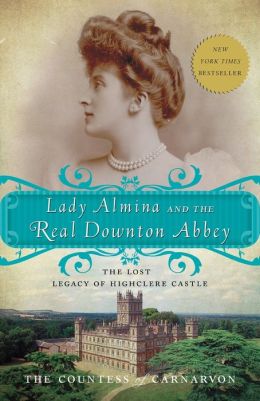
"Lady Almina and the Real Downton Abbey: The Lost Legacy of Highclere Castle" by The Countess of Carnarvon (Broadway Paperbacks 2011)

After a very long hiatus, I am back with a new book review!


Lady Almina and the Real Downton Abbey: The Lost Legacy of Highclere Castle
www.barnesandnoble.com 
I am a big fan of the TV show "Downton Abbey," a British period drama currently set in the 1920s and televised on PBS's "Masterpiece Theatre."  The fourth season (or series, as they say in Britain) has just concluded and I am already looking forward to the next.  Unfortunately, British television series  are very short so we won't get any new episodes until January 2015.

The show is set at the fictitious Downton Abbey, which is filmed in part in the real-life Highclere Castle.  Highclere Castle is currently occupied by the 8th Earl and Countess of Carnarvon.  The book that I am reviewing here is about Lady Almina, the 5th Countess of Carnarvon.  She occupied Highclere Castle during World War I.  Her husband, the 5th Earl of Carnarvon is famous, along with Howard Carter, for discovering King Tut's tomb in Egypt.  But Lady Almina's life was interesting in her own right.

Much like Lady Cora on "Downton Abbey,"  Lady Almina was a wealthy heiress who brought a large fortune to Highclere.  She proved to be adept at managing affairs at Highclere and hosting lavish parties.  However, she is best known for establishing a hospital at Highclere during WWI, which may have been the inspiration for Downton Abbey doing the same.  Lady Almina was an excellent hospital administrator and closely oversaw the workings of the hospital.  She was highly involved with patient care and spared no expense to make sure the hospital was successful.  The majority of the book focuses on this time period.

I admit I was skeptical when I picked up this book, which was part of a "Downton Abbey" display at Barnes & Noble.  I wondered if it might end up being a poorly written book meant to take advantage of the success of the TV show.   However, being a fan of the show and wanting to know more about its real-life setting, I figured it was worth a shot.  I'm glad I took that chance as I thoroughly enjoyed the book.  I don't know how much the current Countess of Carnarvon was actually involved in writing the book or if it is ghost-written.  Regardless, it's worth a read for anyone interested in "Downton Abbey" or WWI Britain.  In fact, there's a companion book that I have since purchased that covers the life of Lady Almina's daughter-in-law, the 6th Countess of Carnarvon.  I hope I enjoy that book as much as I did this one. 


29 September 2012

Kevin J. Hayes, "The Mind of a Patriot: Patrick Henry and the World of Ideas" (University of Virginia Press 2008)


The Mind of a Patriot: Patrick Henry and the World of IdeasWhen I was last in Washington, D.C., I visited the Library of Congress. There, in a dimly lit room was an exhibition of Thomas Jefferson's books. It was fascinating to look at these old books, especially the law books with titles and authors I recognized. Patrick Henry had no such collection. This lack of a personal library has led some to believe that Henry was not a well-read man. Indeed, he wasn't educated in the same way as many founding fathers such as Jefferson or John Adams were. However, Henry did become a lawyer and a celebrated orator, uttering the famous lines, "Give me liberty or give me death!"

With this book, author Kevin J. Hayes purports abolish the idea that Henry was not well-read simply because he didn't have an extensive library.  At the time of Henry's death, an inventory of his books was taken.  This list of 188 books is reproduced in the appendix to this book.  Jefferson's personal library, by contrast, measured in the thousands.  So what does Henry's library say about him?

Hayes points out that while Henry read many books, he did not feel compelled to retain them once he absorbed the contents.  He would generally give books away once he was done with them, rather than keep them to accumulate dust on a shelf.  However, the books Henry does have tell us a lot about him.  One thing that jumped out at me was the similarity between the famous quote listed above to lines in Joseph Addison's Cato:  It is not now a time to talk of aught/But chains, or conquest; liberty or death." (p. 73)  Hayes makes it clear that Henry pulled much from written sources.

It was also interesting to see the number of English spelling and usage books Henry had in his library.  He was always interested in improving his speaking skills. Finally, as a lawyer he possessed all the important books that lawyers of the day typically read. 

I really enjoyed this book that showed an example of how the books people read in the Revolutionary era shaped the times.  This was a unique perspective and one that I appreciated as a book lover and history buff.  It made me think about what my library says about me. 

18 June 2012

"Ellen and Edith: Woodrow Wilson's First Ladies" by Kristie Miller (University Press of Kansas 2012)

Wow!  I can't believe how fast time flies.  This is my first post of 2012, which is terrible, but better late than never I suppose!  So here's my first book review of the year.

book cover imageI read a lot of history and biography books, but my focus tends to be pre-1900.  However, when I was at the National Book Festival in Washington, D.C. last fall, I had the opportunity to see Kristie Miller discuss this book.  I was intrigued and purchased the book as soon as I returned home.

The first thing you notice about this book is its feel.  It's narrower than the average book and is wrapped in something more leather-like than usual.  I always take the dust jacket off when I read a book, so it was nicer to hold than other books.

Prior to seeing Ms. Miller speak, I knew very little about President Wilson other than that he was President during WWI.  I wasn't aware he had two wives during his term, and while this book focuses on them, I learned a lot about President Wilson as well.  He was a man who needed a woman by his side, and he married his second wife (Edith) not too long after the death of his first wife (Ellen). 

Wilson married Ellen well before he got into politics.  Ellen could have had a career of her own as an artist, but she chose to give that up to support her husband, first as a professor at and president of Princeton and then as a politician.  She raised the couple's children and probably was a more astute politician than her husband.  She also looked the other way when Wilson had a close, if not adulterous, relationship with another woman.  Unfortunately, Ellen died during Wilson's first term.

Seventeen months after Ellen's death, Wilson married Edith.  This might have been considered too soon, but even Wilson's daughters acknowleged that he needed female companionship.  Edith was a controversial figure.  Some time into Wilson's second term, he suffered a series of strokes that left him largely incpacitated.  Rather than turn power over to the Vice Presdient, Edith essentially took over.  The French Ambassabor even referred to her as "Mme. President" when Edith rather than Wilson met with him to dicuss terms of the treaty that would end WWI.  Edith determined who could see the President and which issues would be brought to him and which wouldn't.  Wilson died in 1924, just three years after leaving office in 1921.  Edith survived him by nearly 40 years and spent much of that time rehabilitating what was a fairly negative impression of Wilson's predidency.

One thing that really struck me while reading this book was how much time President Wilson spent golfing.  It seemed the more stressful the times, the more he golfed to relieve that stress.  We hear a lot of negative comments today about the amount of time President Obama spends on the golf course, as if it affects his ability to govern.  I think Wilson's example shows that he was a better President when he took that time away from the job, and we should possibly be less critical of modern Presidents doing the same.

I enjoyed this book and found it easy to read.  Sometimes biographies can get read like history textbooks and this definitely reads as a story.  I would recommend this book for the following audiences: anyone who thinks they don't like reading history or biographies or is new to this era of history, as I was; those who enjoy reading about Presidents or First Ladies; and those who enjoy WWI-era history.


Book cover image courtesy of http://www.kansaspress.ku.edu/milell.html


24 March 2011

C-Span's Book TV -- "Andrew Johnson" by Annette Gordon-Reed

I am a big fan of C-Span's Book TV.  Every weekend, C-Span2 airs programs about books.  These may be interviews with authors, book readings, programs from book fairs around the country, and presentations by authors.  This last is my favorite to watch.  Each week I look at the listings for the coming weekend and often set my DVR to record one or more shows.  I currently have a backlog!

Yesterday, I watched a presentation by Annette Gordon-Reed, who wrote a biography of President Andrew Johnson for the American Presidents series.  You may recall that I recently reviewed the biography of Chester Arthur from that series.  Ms. Gordon Reed apparently normally focuses on slavery issues (she is African American), and stated in her presentation that she typically avoids the period of Reconstruction because it's very emotional for her.  However, she was asked by friends to write this biography for the series and she agreed to do so.

I enjoyed listening to her talk about the process of doing the research and how her feelings about the era influenced her writing.  I also learned quite a bit about Johnson from the presentation.  Many of us, myself included, know little more than that Johnson was impeached (but escaped conviction by only one vote) and that he is considered among the worst presidents we've had.   Ms. Gordon-Reed talked about Johnson's viewpoints regarding society at the time, such as his opinion that whites should always be above blacks, and that he really wan't that in favor of abolishing slavery.  Therefore, that colored his view of how to reincorporate the South into the Union, and may have extended the racial issues that didn't even begin to get resolved until the mid 20th Century.

I am very interested to get this book to add to the editions I already have from the series.

If you'd like to view the presentation, it can be found on C-Span's Book TV website at http://www.booktv.org/Program/12207/Andrew+Johnson.aspx

14 August 2005

Jane Austen: A Life -- Claire Tomalin (1997)

This was my and Melinda's book club book for July. (Look for her comment to this review.) We had recently read a chldren's book by Mary Shelley, and Tomalin wrote the introduction to the book. This introduction, a short biography of Shelley and the circumstances under which she wrote the children's book, was actually more interesting than the children's book itself. Two months later, Melinda chose Tomalin's biography of Jane Austen.

Perhaps the most striking thing about this book is that there is so much more information about Austen's family than about Austen herself. This is most likely because Austen's sister, Cassandra, burned almost all Austen's letters after Austen's death. Similarly, there are no pictures of Austen, while there are for everyone else in her family.

This book would be difficult to read and less interesting if you weren't already familiar with Austen's novels. I enjoyed the chapters about "Pride and Prejudice" and "Sense and Sensibility" more enjoyable than the chapters about novels I hadn't read. Tomalin frequently compares people and events in Austen's life to things in the novels. You wouldn't understand these references if you hadn't read the correcsponding novel.

My biggest criticism of the book is that Tomalin frequently presumed Austen's actions or emotions without any basis. Granted, she clearly stated that "perhaps" Austen felt or did something, so you never got the impression that what she said was fact. Nevertheless, I often thought Tomalin was presuming things based on her 20th century experience and with knowledge of things Austen perhaps wouldn't have known.

All in all, I enjoyed reading this book. I found interesting how difficult it was for the Austen sisters to be unmarried women who therefore had to depend on their parents and brothers for support. (Austen was in her 30s by the time her novels were published, and didn't make a whole lot of money from them.) It makes me appreciate our modern world where women can have careers and support themselves.

Rating: 3.5 stars out of 5.