Showing posts with label Book Reviews -- Revolutionary Era. Show all posts

29 September 2012

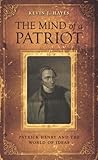
Kevin J. Hayes, "The Mind of a Patriot: Patrick Henry and the World of Ideas" (University of Virginia Press 2008)


The Mind of a Patriot: Patrick Henry and the World of IdeasWhen I was last in Washington, D.C., I visited the Library of Congress. There, in a dimly lit room was an exhibition of Thomas Jefferson's books. It was fascinating to look at these old books, especially the law books with titles and authors I recognized. Patrick Henry had no such collection. This lack of a personal library has led some to believe that Henry was not a well-read man. Indeed, he wasn't educated in the same way as many founding fathers such as Jefferson or John Adams were. However, Henry did become a lawyer and a celebrated orator, uttering the famous lines, "Give me liberty or give me death!"

With this book, author Kevin J. Hayes purports abolish the idea that Henry was not well-read simply because he didn't have an extensive library.  At the time of Henry's death, an inventory of his books was taken.  This list of 188 books is reproduced in the appendix to this book.  Jefferson's personal library, by contrast, measured in the thousands.  So what does Henry's library say about him?

Hayes points out that while Henry read many books, he did not feel compelled to retain them once he absorbed the contents.  He would generally give books away once he was done with them, rather than keep them to accumulate dust on a shelf.  However, the books Henry does have tell us a lot about him.  One thing that jumped out at me was the similarity between the famous quote listed above to lines in Joseph Addison's Cato:  It is not now a time to talk of aught/But chains, or conquest; liberty or death." (p. 73)  Hayes makes it clear that Henry pulled much from written sources.

It was also interesting to see the number of English spelling and usage books Henry had in his library.  He was always interested in improving his speaking skills. Finally, as a lawyer he possessed all the important books that lawyers of the day typically read. 

I really enjoyed this book that showed an example of how the books people read in the Revolutionary era shaped the times.  This was a unique perspective and one that I appreciated as a book lover and history buff.  It made me think about what my library says about me. 

23 April 2011

#7 -- "American Insurgants, American Patriots: The Revolution of the People" by T.H. Breen (2010)

We all know about the American Revolution from the perspective of the Founding Fathers.  However, this book presented the Revolution from the point of view of the average, everyday American.  This was a viewpoint I'd never read about before, so I really enjoyed this book.  I was completely unaware at how grass-roots the Revolution really was.  People from Maine to Georgia were all intimately involved in supporting our country's bid for independence. 

One thing I had never heard about before was something called "The Association."  This was an act by the Continental Congress calling on municipalities to form committees to spread the revolutionary agenda.  In many towns, all citizens had to sign petitions stating they were on the American side of the cause.  Anyone who supported the British was ostracized from the community, and would have to go in front of the committee and recant their views in order to be accepted again.  The book goes into a lot of detail about how different communities enforced the Association.

People also were really prepared to take up arms if necessary to support people in other parts of the country.   For example, at one point before any of the fighting actually began, there was a report that Boston was being attacked by the British.  People from other New England colonies immediately organized and began a march towards Boston to support those living there.  Even people in the southern states, too far away to send militia, sent money and other items to support those in Boston who were in need during the British occupation of the city.  This is all especially amazing when you consider the fact that people in that time very rarely left the colony in which they lived, yet they were quick to come to the defense of others. 

I really enjoyed this book because it gave me a new perspective of that time in our country's history.  When you think about it, it really wouldn't have mattered what our Founding Fathers did or said if the ordinary people living in America hadn't also supported the cause of revolution.

Rating:  4.5 out of 5 stars.

20 April 2011

Cookbook Sundays Comes to Wednesday, Revolutionary Style!

One of my favorite restaurants anywhere is City Tavern in Philadelphia.  It is where our Founding Fathers met and ate, and they still serve all the traditional foods of the era.  It's a really fun place to eat because it feels like you're stepping back in time, and the food is wonderful.  Recently, my husband bought The City Tavern Cookbook (2009), and tonight he surprised me with a meal almost entirely from that book.  I had to blog about it, as it proves who the real cook in the family is.

First, we had Traditional Beef Stew (pg. 190).  The meat was marinated in red wine overnight, and the wine was used for the sauce.  I think that really was the key to the stew's success.  Unfortunately, he left out the carrots, because he forgot to get them at the store. The recipe also called for bacon, which he forgot as well.  The stew was good without them, but the added color and flavor of the carrots and bacon would have made it even better.  The stew was served with smashed potatoes and dinner rolls. 

Then, for dessert we had Blueberry Cobbler (pg. 253).  This dessert was not difficult to make, and tasted amazing.  The crumble topping is the best part!  It was served warm with ice cream on top.  A perfect end to our Revolutionary meal.  Maybe the leftovers will be breakfast tomorrow!

I don't normally rate cookbook recipes, but I've been asked to do so for this one.  I rate it a 4.87 out of 5 stars.  Had there been carrots in the stew, it might have ranked a 4.92 with carrots and a 5.0 with carrots and bacon.  My husband's an accountant/baker, so you know I had to use odd numbers!

22 February 2011

Failed Attempt -- "American Scripture: Making of the Declaration of Independence" by Pauline Maier (1997)

I always have a book that I keep at school to read during lunch or if I'm prepared for class early enough to have some time to read.  As you can imagine, it takes me quite a while to get through my "school book" reading only a few pages at a time here and there.  But it's better than trying to remember to bring a book back and forth from home.  Inevitably, the book is guaranteed to be wherever I am not.  This book has been my "school book" for the last couple of weeks.

Maier discusses not only at THE Declaration of Indepdence, but also smaller declarations by communities all over the thirteen colonies.  It was meant to show how it was more than just the founding fathers who were ready to break away from England.  Further, the declarations were all remarkably similar, even though there was little to no communication among groups who may have been located anywhere from Massachusetts to Georgia.  This should have been a book I liked.  Unfortunately, it just wasn't working for me.  It is only on rare occasion that I decide to quit reading a book. I usually slog my way through it out of principle -- one should finish what one starts, right? However, sometimes it's just best to quit and move on.


I think the main problem is that this book was a little too academic for my tastes.  It read to me more like the law review articles I dealt with in law school:  well researched and documented but lacking in any kind of passion, almost as if the author had to write it rather than wanted to write it.  It certainly wasn't a book I looked forward to reading at lunch every day.  Rather, I was reminded of something a history professor might assign to his/her students, and the students grumble about having to read it.  Once I realized that, like a student might do, I was forcing myself to read the book, I knew I had to stop. 

So what do I do with a book I don't really care for?  I don't throw books away; they just go back on my shelf in case someone else might be interested in reading it.  Who knows, maybe I'll give it another go one day.
  

28 January 2011

(#2) "Founding Brothers: The Revolutionary Generation" by Joseph J. Ellis (2000)

Joseph J. Ellis is a fairly prolific writer of Revolutionary era biographies.  He has written about John Adams, Thomas Jefferson, George Washington, and the relationship between John and Abigail Adams.  "Founding Brothers" discusses six different stories from the era:

1.  The Alexander Hamilton/Aaron Burr duel.
2.  The agreement between Alexander Hamilton and James Madison (aided by Thomas Jefferson) whereby Hamilton got support for his plan to have the federal government assume the states' war debts, and Madison got support for the new capital being located on the Potomac.
3.  The effect of failure of the founding fathers to put an end to the slave trade.
4.  Washington's farewell address after the conclusion of the Revolutionary War.
5.  The relationship between Adams and Jefferson before that relationship deteriorated as a result of the contentious elections of 1796 and 1800.
6.  The marriage of John and Abigail Adams, and the renewal of the friendship between Adams and Jefferson in their old age.
.
At 248 pages, and covering six topics, it isn't surprising that Ellis just hits the surface of each these issues.  Indeed, Ellis took his research from the last topic and turned it into an entire book about John and Abigail Adams' marriage ("First Family," which, incidentally, will be the topic of my next book review).  As such, it's a good introduction to many of the most important players in the founding of our country.  From here, the reader can seek out more detailed biographies, many of which, as noted, Ellis has written.  Therefore, I think this book is best suited for someone who hasn't read a lot about this period.

There was one thing about Ellis's style that bothered me somewhat, and that's his excessive use (in my opinion) of the semi-colon.  At times, it made sentences stretch out too long, and I'd forget at the end of a sentence what was at the beginning.  I think his writing could have been much more succinct, which would have made the book easier to read.

Also a minor quibble, is that there were no pictures in the book.  Yes, I know this isn't a children's book; but biographies almost always have a few pictures in the middle of the book. For a reader who is new to this period of history, some pictures might make the characters come alive.  I know that I like seeing what the people I'm reading about looked like, particularly if it's someone with whom I'm less familiar. 

All in all, I think I probably was not in the target audience for this book, as I've read extensively about much of these stories.  Therefore, for me, it wasn't in-depth enough to really keep my interest.  I would recommend the book, however, for someone who is interested in reading about this era for the first time.

My rating: 3 out of 5 stars.